
The Soil Assembly: Ecologies, Circularities and Living Pedagogies
Kochi-Muziris Biennale presents ‘The Soil Assembly: Ecologies, Circularities and Living Pedagogies” in partnership with Srishti Manipal Institute of Art, Design and Technology, Bangalore India.
 This international gathering of artists, designers, curators, architects, educators, activists, farmers, and hackers is to support the freedom of exchange and sharing of knowledge. It is an active dissemination of a humanistic/biodiverse/holistic approach within notions of food growing practices, more-than-human correlations in these practices and life, as well as the freedom of movement for plants, animals, humans, algae, fungi and seeds.
With this assembly, we intend to subscribe to the essential convictions that our life on this planet is symbiotically linked to its food resources and its biodiversity, from the tree tops to the deepest groundwater or ocean surface water sufficiently exposed to sunlight.
The first assumption of the “Soil Assembly” is that most human interactions depend on the 20 cm surface thickness of humus so that it is imperative to nurture back the healing balance between human/more-than-human interests so we, humans, do not become aliens to the planetary holobiont.
The assembly will be a voice for highlighting thinking in practice and monitoring developments across local/critical zones, awareness of multi-species futures, environmentally friendly and fair transportation of food and feed, as well as social struggles for agroecology and climate justice.
The assembly aims to connect with a wider audience to highlight the interventions of various creative collectives and individual artists around the world in this field and also wants to show that it is important today to teach and transmit these knowledges in art and design schools, so that new generations of art practitioners can also contribute to the collective regeneration of the degraded landscapes of the Anthropocene. All these interventions aim to reintegrate and reclaim that symbiotic coexistence we share with diverse species that is the foundation of all life.
“Teaching ecology in an art school may seem incongruous or out of place. However, it makes sense if we consider art in its relationship to reality and in its capacity to transform, both on an individual and collective scale, the representations linked to nature. Faced with the ecological emergency, teaching ecology in the same way as teaching art seemed obvious to us, especially since many artists, at least from Joseph Beuys to Pierre Huyghe, have made it the heart of their art.”
Les Jardins Suspendus, School of Art of Belfort, France.
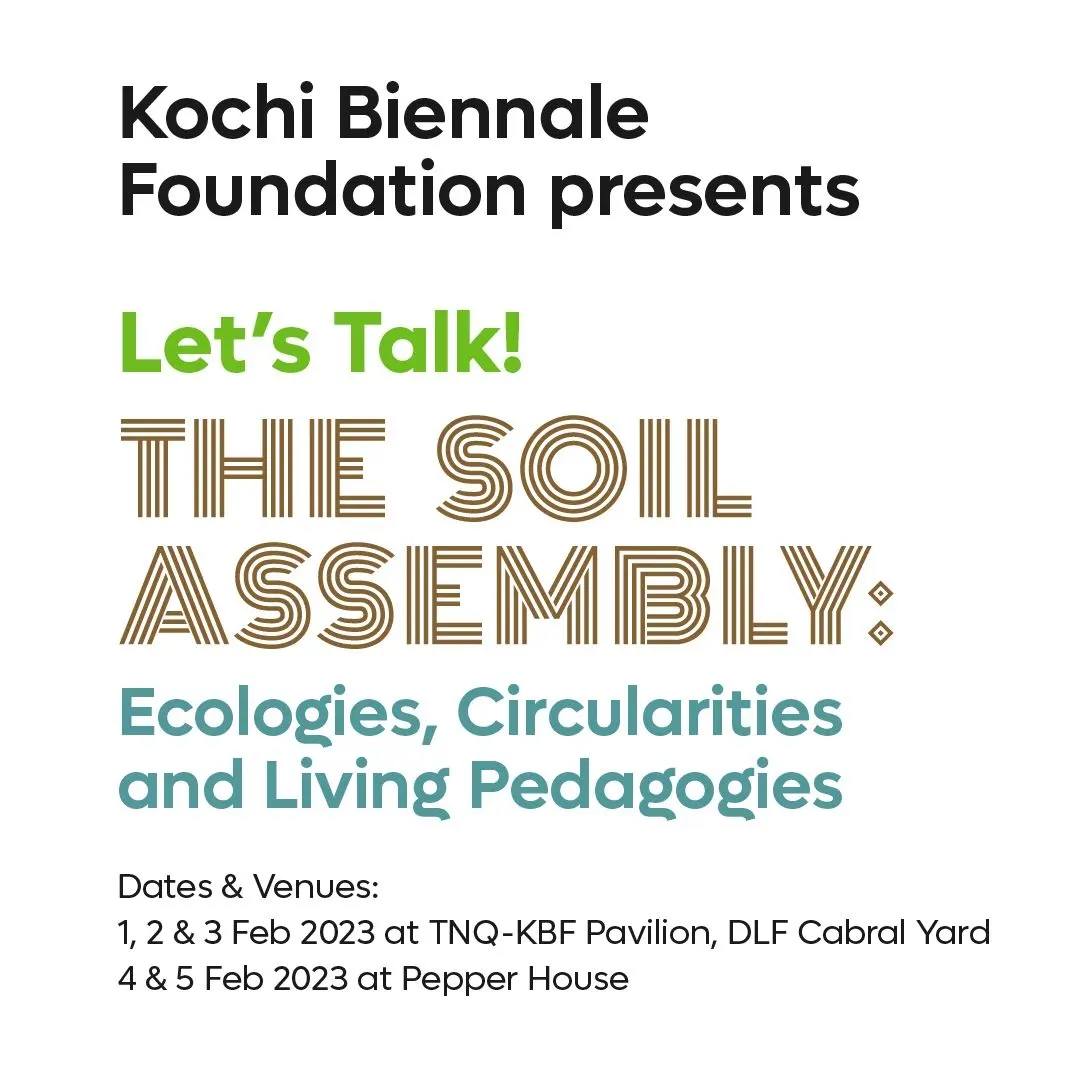
Program
february 2023
01feb13:0020:00Virtual/ Physical EventDay 113:00 - 20:00(GMT+05:30) View in my timeDLF Cabral Yard
Time
(Wednesday) 13:00 - 20:00(GMT+05:30) View in my time
Location
DLF Cabral Yard
X68W+WG3, TM Muhammad Rd, Kunnumupuram, Fort Kochi, Kochi, Kerala 682001, India
Schedule
- february 1, 2023
13:00 Opening of the Soil Assembly13:00 - 14:00Inauguration of the ‘The Soil Assembly’ by Bose Krishnamachari, director of the Kochi-Muziris Biennale; David Kasuma, president of the World Design Organisation; Senate member Sreeni Srinivasan; Geetha Narayanan, founder of the Srishti Manipal Institute.Speakers: Ewen Chardronnet (Fr), Maya Minder (Ch), Meena Vari (In), Neal White (Uk)
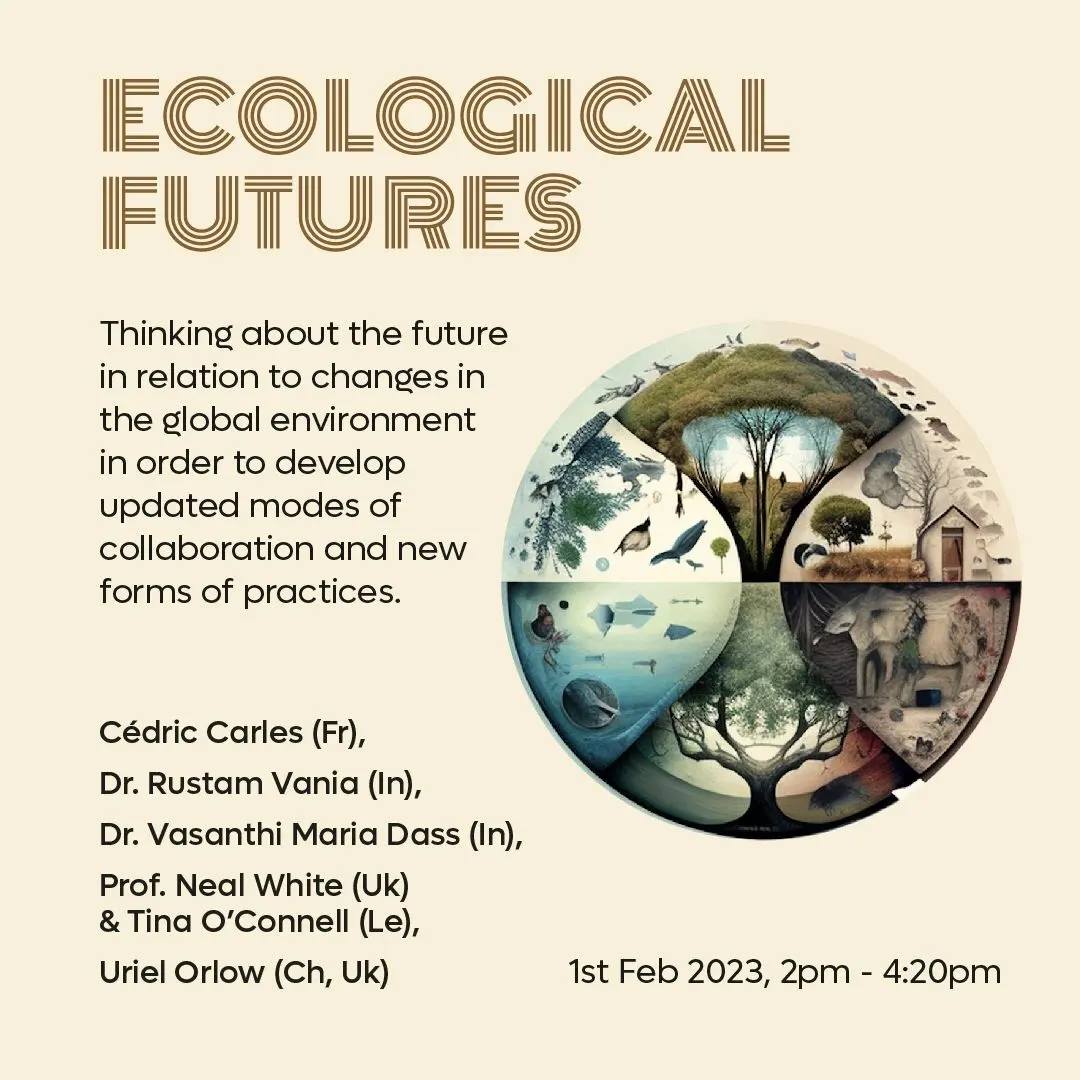
14:00 Presentations and Panel Discussion : Ecological Futurisms session14:00 - 16:20Panel Discussion moderated by Rustam Vania
Ecological Futurisms are a collective of artists and researchers based at Centre for Research and Education in Arts and Media (CREAM), University of Westminster since 2020. https://cream.ac.uk/ecological-futurisms/ Speakers: Cédric Carles (Fr), Dr. Rustam Vania (In), Dr. Vasanthi Maria Dass (In), Prof. Neal White (Uk) & Tina O’Connell (Le), Uriel Orlow (Ch, Uk)16:20 Meet & Greet16:20 - 17:20Introducing the participants
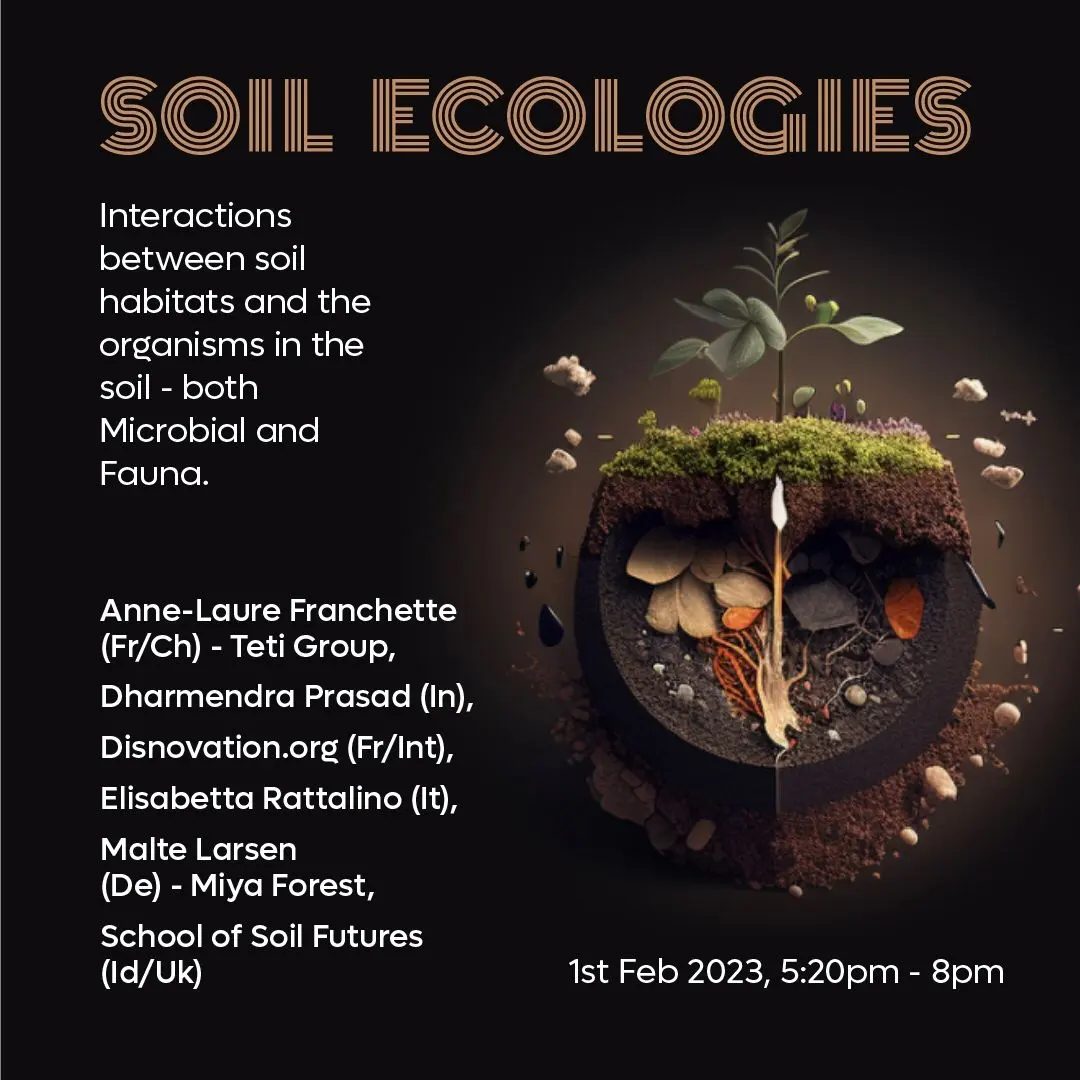
17:20 Presentations and panel discussions, Soil Ecologies17:20 - 20:00Session moderated by Elisabetta RattalinoSpeakers: Anne-Laure Franchette (Fr/Ch) - Teti Group, Dharmendra Prasad (In), Disnovation.org (Fr/Int), Elisabetta Rattalino (It), Malte Larsen (De) - Miya Forest, Maya Minder (Ch)
Speakers for this event
-
Anne-Laure Franchette (Fr/Ch) - Teti Group
Anne-Laure Franchette (Fr/Ch) - Teti Group
Artist
Anne-Laure Franchette is an artist with a background in Humanities. Guided by an interest in counter-narratives, hierarchies of dignity and categorisation, this double curriculum informs a transmedial practice materialised by field research, archival enquiries, creative writing and installations. Franchette co-founded and curates the organisation VOLUMES, which researches and mediates art forms related to editing and publishing. She is also an active member of the interdisciplinary research group TETI (Textures and Experiences of Trans-Industriality) which brings together artists, filmmakers, historians, art historians, architects and authors.
http://www.annelaurefranchette.com/
The interdisciplinary study group on textures and experiences of trans-industriality (TETI) explores the changing imaginaries of our global/glocal societies at the turn of the 20th-21st centuries. The group favours enquiries into trans-disciplinary commonalities, and investigates the potency of ideas as they migrate from one body of practice into another. Stemming from a series of workshops and conferences, TETI Press’s first publication « Mobile Soils » (2021) explores the transformation of our bounds to the ground in the early 21st century through a range of personal reflections, in which authors revisit their practice in the light of earthly attachments and ecological pressure.
Artist
-
Cédric Carles (Fr)
Cédric Carles (Fr)
Artist
Cédric Carles is a French-Swiss artist and designer. Change maker and community making artist, his work mixes an experimental approach with a tangible prospective reflection on our spatial and climatic environment. His projects go beyond the cult specific to design of the object, to open up to other disciplines, to the vast field of education and innovations, including social ones. Artist, transition designer and director of Atelier 21 in Paris, passionated about energy issues, Cédric Carles develops artistic and ecological interventions in the public space. He is today the driving force behind a vast network of actors working for energy transition. Carles is co-editor of Retrotech and Lowtech – how forgotten patents can shake the future (paleo-energy press, 2020)
Cécric Carles will present a global reflection on energy and climate issues, through their projects such as https://paleo-energetique.org/ a multi-collaborative project to list retro-technological inventions from the past and the future.
Artist
-
Dharmendra Prasad (In)
Dharmendra Prasad (In)
Artist
Dharmendra Prasad (In) is the co-founder of the Anga Art Collective. The collective is an Assam-based initiative founded by a group of friends who sought to create a space that engages in critical thinking about visuality and materiality based on the geographical and social landscape of the region. Dharmendra Prasad practice was born from an abiding interest and appreciation of his grandfather’s non-extractive approach to farming.
Artist
-
Disnovation.org (Fr/Int)
Disnovation.org (Fr/Int)
Research collective
Disnovation.org is a research collective set up in Paris in 2012, whose core members include Maria Roszkowska (Pl/Fr), Nicolas Maigret (Fr), Baruch Gottlieb (Ca/De), and Jérôme Saint-Clair (Fr). They work at the interface between contemporary art, research and hacking, and compose tailor-made teams for each investigation together with academics, activists, engineers, and designers. More specifically their recent artistic provocations seek to empower Post Growth imaginaries and practices by challenging the widespread faith that ‘economic growth’ and ‘technological fixes’ will solve the ecosystemic disruptions they produced in the first place. Their work is presented at Kochi Muziris Biennale.
Life Support System
This artistic provocation seeks to estimate the orders of magnitude of critical ecosystem services, which are fundamental to all planetary life processes. In cultures overdetermined by concepts from economics, we are left without adequate discursive instruments to socially or politically address the importance of ecosystem contributions to life on Earth. This experiment consists of 1 square meter of wheat, cultivated in a closed environment. Critical inputs such as water, light, heat, and nutrients are measured, monitored, and displayed to the public. This procedure makes palpable the immense scale of ecosystem contributions, and provides a speculative reference for a reckoning of the undervalued and over-exploited ‘work of the biosphere.’Research collective
-
Dr. Rustam Vania (In)
Dr. Rustam Vania (In)
Designer
Rustam Vania (In) is an Art and Design professional and academic Dean at Srishti Manipal Institute of Art Design and Technology, Bangalore since 2005. He has also been practicing Editorial and Publication Design in print and digital media.
Designer
-
Dr. Vasanthi Maria Dass (In)
Dr. Vasanthi Maria Dass (In)
Researcher
Dr. Vasanthi Dass (In) did her MA and Ph.D. in Film Studies and Critical Theory from Indiana University of Pennsylvania, US. She is a faculty, researcher, and dean for New Humanities and Design at Srishti Manipal Institute for Art Design and Technology, Bengaluru.
https://srishtimanipalinstitute.in/people/vasanthi-mariadass
Researcher
-
Elisabetta Rattalino (It)
Elisabetta Rattalino (It)
Art historian
Elisabetta Rattalino, Ph.D., is an art historian, educator and curator. Her research engages with artistic practices and visual cultures from 1945 to present day, with a focus on rural environments and landscapes. Since 2010, she has been collaborating with socially-engaged artists and arts organisations in both Italy (BAU, Bolzano; Cittadellarte – Fondazione Pistoletto, Biella) and Scotland (Deveron Projects, Huntly).
Currently, she is an Adjunct Lecturer and a Postdoctoral Research Fellow in the Faculty of Design and Arts at the Free University of Bolzano-Bozen, Italy.Art historian
-
Ewen Chardronnet (Fr)
Ewen Chardronnet (Fr)
Curator
Ewen Chardronnet (Fr) is a collective artist, author, journalist and curator. He is currently editor-in-chief of the bilingual web magazine Makery.info and coordinator of the Creative Europe cooperation programs “More-Than-Planet” (2022-2025) and “Rewilding Cultures” (2022-2026). In his work, he is interested in practices, tactics and speculations that connect artistic research and scientific knowledge to the creation of social situations that intertwine discourses and shifts of perspectives in the very fabric of society.
https://www.makery.info/en
https://laboratoryplanet.org/
https://roscosmoe.orgCurator
-
Malte Larsen (De) - Miya Forest
Malte Larsen (De) - Miya Forest
Artist
Miya Forest community consists of scientists, artists, mushroom growers, DIYers and passionate explorers of the microbial world. The members of this group are gardeners of life, the organisms they work with are the seeds and the breeding grounds of fertile soil are the open laboratories around the globe. They develop biological, computational and social technologies and make them available to all.
Artist
-
Maya Minder (Ch)
Maya Minder (Ch)
Following the Biohacker, Maker and Thirdspace movements, Zurich based Maya Minder uses grassroots ideas, safe zones and citizen science to enable collective story telling through food and cooking. After studying Art history at the University of Zurich and Fine Arts at Zurich University of Arts, she has been co-curating and organizing projects independently or within the International Hackteria Society. Within her Green Open Food Evolution project she creates entanglements between human commodities and animism of nature. “Cooking transforms us” is a framework Minder weaves like a strings through her work. Cooking serves her to reveal the metaphor of the human transformation of raw nature into cooked culture, fostering evolutionary ideas of a symbiotic co-existence between plants, animals and humans.
-
Meena Vari (In)
Meena Vari (In)
Artistic Coordinator
Meena Vari (In) is the Dean at the School of Media Arts and Sciences and Dean of Contemporary Art and Curatorial Practice at Srishti Manipal Institute of Art, Design and Technology (www.srishtimanipalinstitute.in). She coordinates activities of the Center for Experimental Media &Arts (CEMA) and works closely with artists to develop the practice of Contemporary arts in Srishti and outside. Since 2004, she has been curating an annual international project called ‘Srishti Interim – Festival of Ideas & Performance’ by inviting Contemporary artists from around the world. Soil Assembly is one of the projects initiated during the Srishti Interim 2023.
Artistic Coordinator
-
Neal White (Uk)
Neal White (Uk)
Neal is from London, founder of Office of Experiments, and Professor of Art based at CREAM, University of Westminster where he is part of the Ecological Futurisms Collective.
-
Prof. Neal White (Uk) & Tina O’Connell (Le)
Prof. Neal White (Uk) & Tina O’Connell (Le)
Artists
Tina O’Connell and Neal White have worked together since 2010 developing International commissions, installations and exhibition projects exploring the social and political context of sculpture, media arts and collective memory. They have recently been exploring cohabitation in post-natural environments sensitive to issues of ecological and social justice. Tina is an Irish born artist, and Assoc. Professor of Media and Sculpture and Director of ArtLab at University of Reading. Neal is from London, founder of Office of Experiments, and Professor of Art based at CREAM, University of Westminster where he is part of the Ecological Futurisms Collective.
www.nealwhite.org
www.officeofexperiments.net
www.tinaoconnell.comArtists
-
Uriel Orlow (Ch, Uk)
Uriel Orlow (Ch, Uk)
Artist
Uriel Orlow lives and works between London and Lisbon. His practice is research-based, process-oriented and multi-disciplinary including film, photography, drawing and sound. Uriel Orlow’s work has been presented at major survey exhibitions including in 2022 at the Kochi Biennial, 12th Berlin Biennale, British Art Show 9, Kathmandu Triennale 2077 and 14th Dakar Biennale and previously at the 54th Venice Biennale, Manifesta 9 & 12 in Genk and Palermo, 12th Taipei Biennial, Lubumbashi Biennial VI, 13th Sharjah Biennial, 7th Moscow Biennial amongst others. Orlow’s work has been shown widely in museums and galleries internationally. He is reader at University of Westminster. Currently his work is showing at the Kochi Muziris Biennale.
Artist
02feb13:0020:00Virtual/ Physical EventDay 213:00 - 20:00(GMT+05:30) View in my timeDLF Cabral Yard
Time
(Thursday) 13:00 - 20:00(GMT+05:30) View in my time
Location
DLF Cabral Yard
X68W+WG3, TM Muhammad Rd, Kunnumupuram, Fort Kochi, Kochi, Kerala 682001, India
Schedule
- february 2, 2023
10:00 Workshop Sessions led by Aastha Chauhan (In), Kush Sethi (In) & Suresh Kumar (In)10:00 - 13:00Workshop #1: Living Sculpture at the DLF Cabral Yard by Aastha Chauhan (In) and Kush Sethi (In)
Bio & Community artists Kush Sethi and Aastha Chauhan invites you to explore ways to build a Living sculpture with found or recycled objects, proper soil preparation, adding wild seeds and plants that are already growing around there . The intention of the artists is to interweave the existing landscape with the created sculpture with stories of the past and future. The workshop begins with a walk around the venue, participants are required to collect discarded objects (dry coconuts, discarded shoes, plastic containers etc..). that can function as planters. These planters are assembled in a sculptural form, around one of the trees in the Cabral Yard. Participants will observe closely, the green cover in and around the venue. Based on the tree, plant, insect, moss and lichens that is discovered during the walk, we conduct a quick research on the history, propagation and maintenance of the green subspecies. There will be visit to the local nursery, nearby community garden or urban gardens if possible.
Workshop #2: Placing Arts with Food and Agri-Culture (integrated gardening methods, learning from nature and indigenous practices) by Suresh Kumar (In)
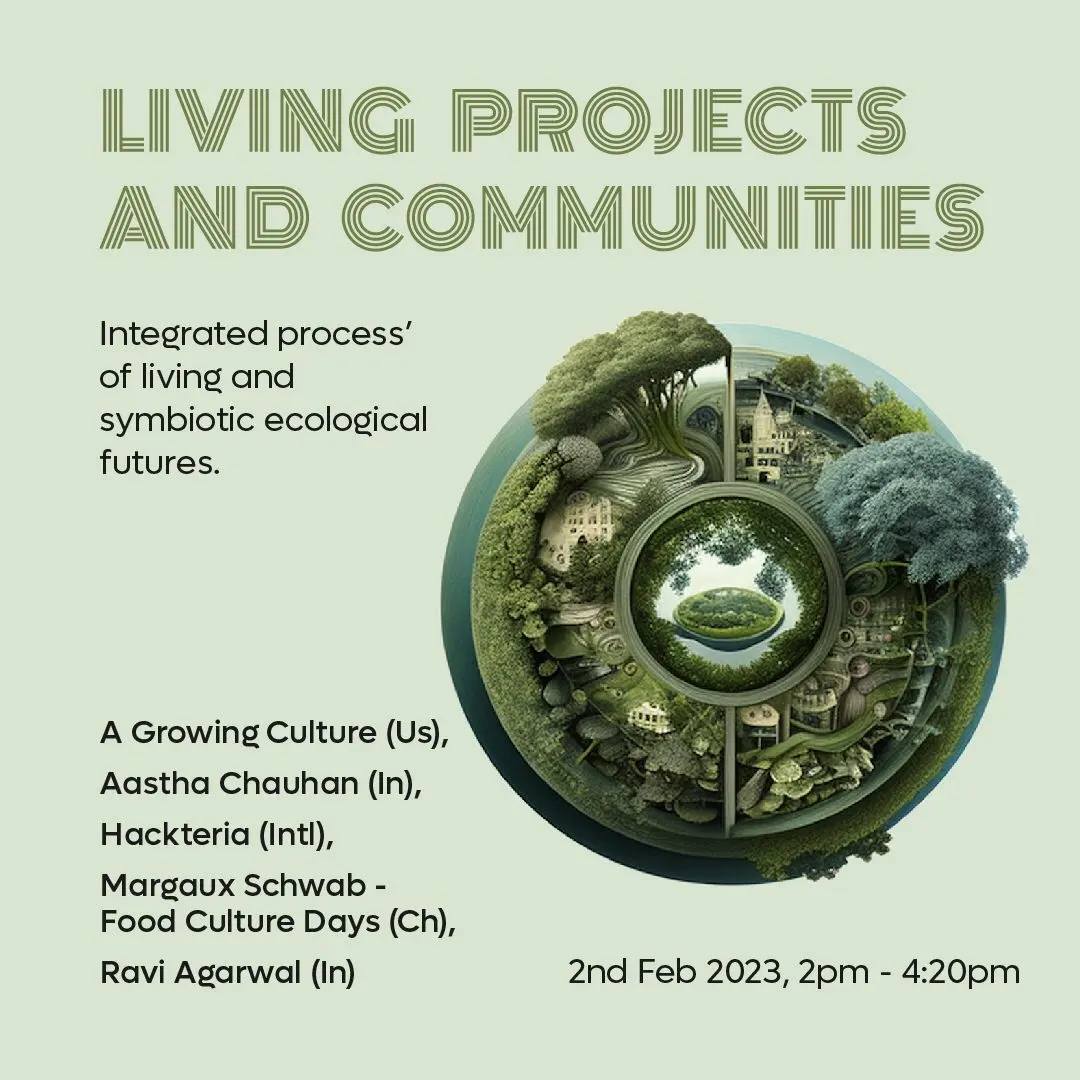
In many indigenous societies, including in India, farming / gardening concepts like 'three sisters', complimentary crop farming, multi crop farming are most successfully tried and tested methods of farming for over the centuries, which would be most self-sufficient approach for feeding a family's daily needs of nutritional food. Kinds of crops like monocots (millets) dicots (beans) oil seeds (all worked as attractive pollinator plants), sacrificial plants or insect replant plants (castor) were sown together to optimize the health of the crops, which could yield better crops. It was a method that offered the communities food and wealth while they were still connected to their traditions. It also ensured an effective and sustainable method for preserving the land's biodiversity, protecting the environment, supporting soil health, and advancing natural resources. The workshop is an invitation to work with this idea of finding the ‘three sisters’ from the local landscape, from gathering wild seeds to wild growth, planting, drawing, and storytelling. The workshop will be an opportunity to connect with the community and its surroundings. It will integrate food systems with arts & culture, offering entry points to rediscover their local history, transforming spaces, and understanding their own personal and community narratives.Speakers: Aastha Chauhan (In), Kush Sethi (In), Suresh Kumar G. (In)14:00 Presentations and Panel Discussion, Living Projects & communities14:00 - 16:20Panel Discussion Moderated by Rustam VaniaSpeakers: Dr. Rustam Vania (In), George Clark (Uk) - Motherbank - with Ismal Muntaha et Bunga Siagian from Jatiwangi Art Factory (Idn), Laboratory for Ecology and Aesthetics (Dk)+ Aziza Hamel (Tn), Ravi Agarwal (In), Vivek Vilasini (In)
16:20 Interaction/performance by Maya Minder (Ch)16:20 - 17:20Maya Minder (Ch) works in the field of Eat-art. As a specialist in lacto-fermentation, she experiments with bacteria, fungi and algae while applying this knowledge to her cooking, filmmaking, crafts and design. In continuity with the history of feminism, she combines art, science, and queer theories with her biohacker practice.
http://www.mayaminder.ch
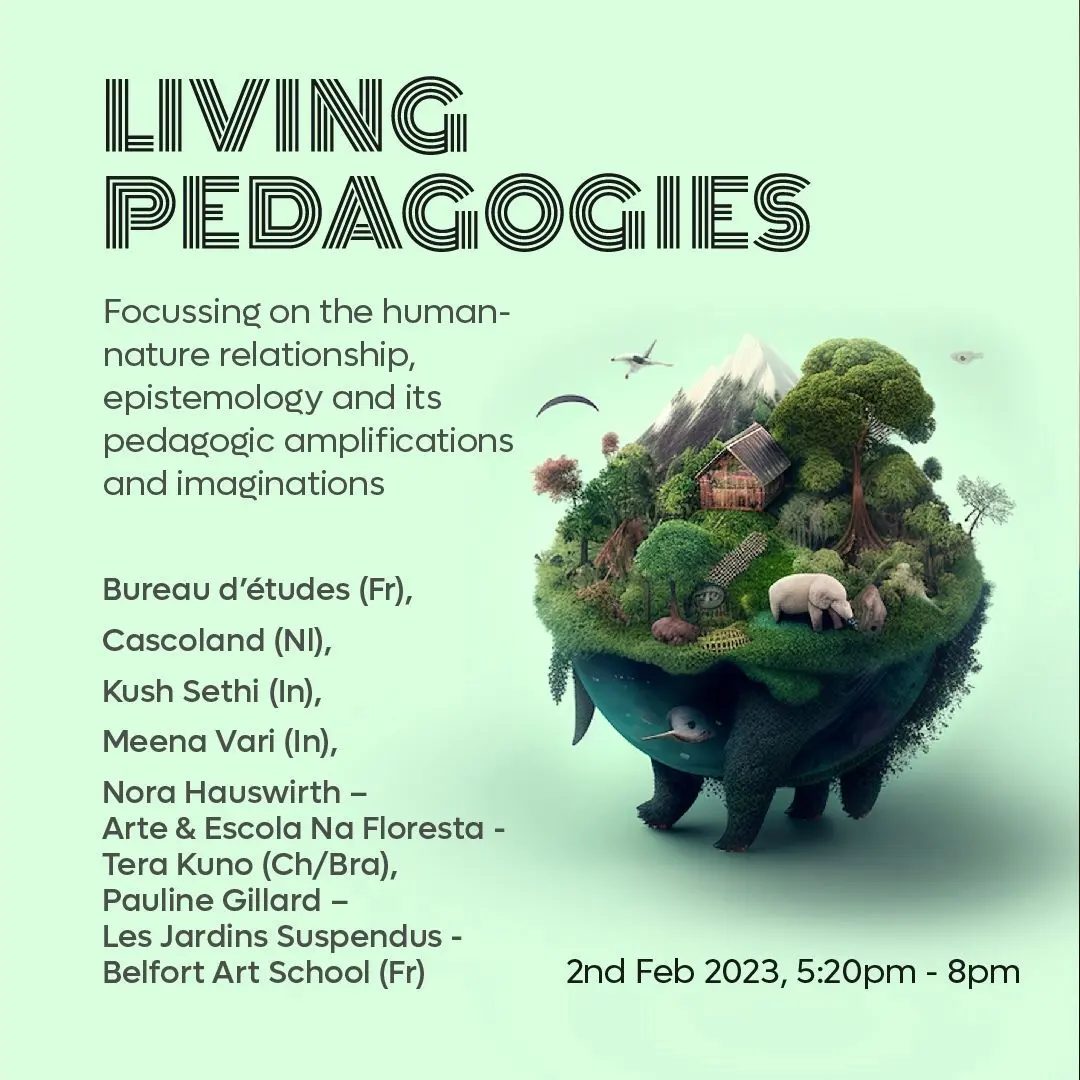
https://www.hackteria.org/ Speakers: Maya Minder (Ch)17:20 Presentations and Panel Discussion, Living Pedagogies17:20 - 20:00Panel Discussion moderated by Meena VariSpeakers: Bureau d’études (Fr), Cascoland (Nl), Kush Sethi (In), Meena Vari (In), Nora Hauswirth – Arte & Escola Na Floresta - Tera Kuno (Ch/Bra), Pauline Gillard – Les Jardins Suspendus - Belfort Art School (Fr), School of Soil Futures (Id/Uk)
Speakers for this event
-
Aastha Chauhan (In)
Aastha Chauhan (In)
Artist
Aastha Chauhan (In) is an artist and curator known for her public art and community engagement projects in New Delhi, particularly in the urban village of Khirkee. She’s currently teaching Curating Public/Community Art projects at Srishti Manipal Institute of Art, Design and Technology. She’s board member of the Henvalvani Community Radio station, a project started as a youth initiative in 2001, in the Himalayan district of Chamba, Uttarakhand. An area which is home to historical, feminist, environmental movements such as the Chipko movement (Tree huggers) and Beej Bachao Andolan (save the (organic seed).
https://srishtimanipalinstitute.in/people/aastha-chauhan
https://henvalvani.wordpress.com/
https://www.downtoearth.org.in/coverage/chipko-an-unfinished-mission-30883
Artist
-
Bureau d’études (Fr)
Bureau d’études (Fr)
Collective of artists
Léonore Bonaccini and Xavier Fourt form the artist-duo Bureau d´études (Fr). For two decades, the group has been producing cartography of contemporary political, social and economic systems. In 2007 they co-founded the Laboratory Planet collective and journal with Ewen Chardronnet. For more than 15 years they are engaged in the Ferme de la Mhotte, a place outside the property located in center France, where a group of people organize their uses together to bring out a social project at the crossroads of culture, agriculture and education. Xavier Fourt and Léonore Bonaccini (member of the artists’ group Bureau d’études) have been active for more than 15 years in the territory, contributing to its development and structuring The School territory of the Valleys du Chamarron.
https://bureaudetudes.org/
https://laboratoryplanet.org/
http://fermedelamhotte.fr/The School territory of the Valleys du Chamarron in the bocage is a prototype of a sustainable territory. In this territory of the future, which for the moment associates six entities, we are learning to live together by relying on a collective based on a collective approach started 45 years ago.
Collective of artists
-
Cascoland (Nl)
Cascoland (Nl)
Artistic projects
Cascoland (Nl) projects are initiated by Fiona de Bell and Roel Schoenmakers and executed with multi-disciplinary teams of creatives. They are aimed at the development of an ecological and social sustainable society, locally and globally. Since 2004 Cascoland has worked on projects in The Netherlands, South Africa, Brazil, Peru, Mexico, Russia, Kyrgyzstan, Palestine, Egypt, Japan and in several countries in Europe and recently at Srishti Manipal Institute of Art, Design and Technology.
Artistic projects
-
Dr. Rustam Vania (In)
Dr. Rustam Vania (In)
Designer
Rustam Vania (In) is an Art and Design professional and academic Dean at Srishti Manipal Institute of Art Design and Technology, Bangalore since 2005. He has also been practicing Editorial and Publication Design in print and digital media.
Designer
-
George Clark (Uk) - Motherbank - with Ismal Muntaha et Bunga Siagian from Jatiwangi Art Factory (Idn)
George Clark (Uk) - Motherbank - with Ismal Muntaha et Bunga Siagian from Jatiwangi Art Factory (Idn)
Artist
George Clark (Uk) is an artist, writer and curator. His work explores the history of images and how they are governed by culture, technology and social political conditions. Recent projects have sought to build new models of assembly, exhibition and moving image production. He is currently a Lecturer at the School of Art, University of Westminster. Founded in 2020 Mother Bank is a collective project to develop financial autonomy and collective action lead by mothers in the village of Wates in West Java.
https://www.georgeandclark.com/mother-bank/
https://jatiwangiartfactory.tumblr.com/Artist
-
Kush Sethi (In)
Kush Sethi (In)
Ecological gardener
Kush Sethi (In) is an ecological gardener and forager based out of Delhi. Inspired by resilient forest ecosystems, his practice seeks to understand problems in manicured urban horticulture formats and find wilder, self-sustainable approaches. Lately, he has consulted Arts and Culture institutes on designing Sustainability Projects for local communities such as with Deutsches Museum Munich (Germany, 2020), Site Gallery Sheffield (UK, 2021), KultureForum WItten (Germany, 2022) and Ubersee-Museum(Germany, ongoing).
Ecological gardener
-
Laboratory for Ecology and Aesthetics (Dk)+ Aziza Hamel (Tn)
Laboratory for Ecology and Aesthetics (Dk)+ Aziza Hamel (Tn)
Curators
Dea Antonsen (DK) and Ida Bencke (DK) are founders and curators of Laboratory for Aesthetics and Ecology (LAE). LAE was established in 2014 as an independent curatorial and publishing platform for experimental, artistic and poetic work around shared exhaustion and collective healing in the intersection between social and ecological inequalities and solidarities. Dea Antonsen (MA) has previously worked as a curator at ARKEN Museum of Modern Art and as a guest teacher at The Royal Academy of Fine Arts. Ida Bencke is a PhD student at Copenhagen University with the research project OIKOS: Care and Crisis. Both Antonsen and Bencke are currently in-house curators at Center for Art and Mental Health. Aziza Harmel is a freelance curator and a writer based in Tunisia. She has previously worked as a curator assistant at Kunsthalle Wien (Vienna), been a part of the curator team at Les Rencontres de Bamako, The African Biennale of Photography (Mali), been the curator of Qayyem – programme in curatorial research (Amman), a curatorial assistant at Steirischer Herbst (Graz), and a curatorial assistant in documenta 14 (Kassel and Athens).
Hosting Lands
Hosting Lands is a slow-growing, decentral exhibition movement unfolding around belonging to land, the politics of hosting, and the creation of translocal alliances through community building, radical pedagogy and reparative practices. Over the course of three years, the exhibition will move between six locations throughout Denmark engaging artists, activists and communities. Hosting Lands explores questions of stewardship and care for land by (re)establishing commons, and by working in collective and regenerative site-responsive manners. Hosting Lands orients itself towards futures beyond the exhibition movement itself by offering transformative infrastructures of the everyday, and by seeking to ignite lasting change in the landscapes, communities and worlds at stake.Curators
-
Maya Minder (Ch)
Maya Minder (Ch)
Following the Biohacker, Maker and Thirdspace movements, Zurich based Maya Minder uses grassroots ideas, safe zones and citizen science to enable collective story telling through food and cooking. After studying Art history at the University of Zurich and Fine Arts at Zurich University of Arts, she has been co-curating and organizing projects independently or within the International Hackteria Society. Within her Green Open Food Evolution project she creates entanglements between human commodities and animism of nature. “Cooking transforms us” is a framework Minder weaves like a strings through her work. Cooking serves her to reveal the metaphor of the human transformation of raw nature into cooked culture, fostering evolutionary ideas of a symbiotic co-existence between plants, animals and humans.
-
Meena Vari (In)
Meena Vari (In)
Artistic Coordinator
Meena Vari (In) is the Dean at the School of Media Arts and Sciences and Dean of Contemporary Art and Curatorial Practice at Srishti Manipal Institute of Art, Design and Technology (www.srishtimanipalinstitute.in). She coordinates activities of the Center for Experimental Media &Arts (CEMA) and works closely with artists to develop the practice of Contemporary arts in Srishti and outside. Since 2004, she has been curating an annual international project called ‘Srishti Interim – Festival of Ideas & Performance’ by inviting Contemporary artists from around the world. Soil Assembly is one of the projects initiated during the Srishti Interim 2023.
Artistic Coordinator
-
Nora Hauswirth – Arte & Escola Na Floresta - Tera Kuno (Ch/Bra)
Nora Hauswirth – Arte & Escola Na Floresta - Tera Kuno (Ch/Bra)
Artists
Nora Hauswirth is a cultural producer with a master’s degree in Curatorship at ZHDK, Zurich University of the Arts. In Switzerland, she worked for several museums, exhibitions and intercultural projects, such as Cabaret Voltaire, Manifesta 11, Openki.net, etc. Since 2017, she is researching about sustainable agriculture and supply systems, and therefore was traveling during 2 years to native communities in the north and northeast of Brazil using a van as a mobile exhibition structure and seed bank. Since 2019, she contributes for Participative Agriculture Movement in the Amazon.
In the face of the current ecological paradigm, amidst climate change, monocultures and ultra-processed foods, the movement “Art & School in the Forest” has been proposing since 2020 a reflection on the care with the land and with people, as well as food, in an artistic and and agro-ecological immersion. Through participative agricultural projects, the collective bridges consumption habits responding to the possibilities of what can be grown locally, promoting a circular system based on planting, harvesting and cooking. The goal is to stimulate individual and collective initiative through artistic and cultural projects in a society characterized by collectivism.
http://www.terakuno.org
https://www.instagram.com/arteescolanafloresta/Artists
-
Pauline Gillard – Les Jardins Suspendus - Belfort Art School (Fr)
Pauline Gillard – Les Jardins Suspendus - Belfort Art School (Fr)
Artistic director
Pauline Gillard is currently teaching the program of “Applied Ecology in Art Education” at the Belfort’s Art’s School. She is also the head of the cultural program and the school’s monitoring system. In 2017, she developed the project of the “Micro-Farms” for the city of Besançon. Since 2011, Pauline has been the artistic director of the association “Intermèdes Géographiques”, a structure dedicated to the realization of works of art in the public space and territorial matters. She has also taught at the National School of Dairy Industry and Biotechnology (ENILBIO) in the field of socio-culture.
Visual arts, Plastic arts and earth cultivation : an educational experience
For the first time in France in an art school, awareness of ecological issues is integrated into all our courses. Students have several ways to do this. They can work on the land during certain workshops, and they also have theoretical courses on biology and the living. This particularity aims to create in these future artists a different relationship to the world through biology, history, science, philosophy, agriculture and gardening. After a full year, they can develop an autonomy on how growing a culture and imagine a different future.Artistic director
-
Ravi Agarwal (In)
Ravi Agarwal (In)
Artist
Ravi Agarwal has an interdisciplinary practice as an artist, environmental campaigner, writer, and curator. He has shown widely, including at the Biennials of Habana (2019), Yinchuan (2018), Kochi (2016), Documenta XI (2002), Sharjah Biennial (2013) etc., and curated several large shows (New Natures, A terrible beauty is born – Goethe Institute and CSMVS Museum, Mumbai, Imagined Documents – Les Recontres d’ Arles 2022). He has authored and edited books and journals (The Crisis of Climate Change, Routledge, 2021; Embrace Our Rivers – Kerber, 2017, Marg- Art and Ecology issue – April 2020). Ravi is also the founder and Director of the environmental NGO Toxics Link and recipient of the UN Award for Chemical Safety and Ashoka Fellowship.
www.raviagarwal.com
www.toxicslink.org
www.sharedecologies.orgEcologies in Transition
The talk will present some of my long-term engagements as an artist and environmentalist, with human and more-than-human communities which live in and with fragile landscapes and are becoming increasingly marginalized. These include traditional fishers living off the Bay of Bengal on the Tamilnadu coast, marigold farmers on the urban river floodplains in Delhi, and the nearly extinct South Asian vulture. These explorations attempt to delve into complex relationships of nature-cultures, and their new confrontations with inter-meshed global-local imaginaries and materialities.Artist
-
School of Soil Futures (Id/Uk)
School of Soil Futures (Id/Uk)
Online initiative by Struggles for Sovereignty (Id) and Arts Catalyst (Uk)
The School of Soil Futures is an online initiative co-organised by Struggles for Sovereignty (ID) and Arts Catalyst (UK) that brings together on Zoom, artists, ecological activists, community organisers, soil caretakers and others working on social and ecological justice from across the world. The School is part of Soil Futures, a network of creative organisations that explores the ground between us. The network is a collaboration between five organisations: Arts Catalyst (Sheffield, UK); RIWAQ (al Bireh, Palestine); Sakiya – Art/Science/Agriculture (Ein Qiniya, Palestine); Struggles for Sovereignty (Yogyakarta, Indonesia); and Vessel Art Project (Puglia, Italy).
During the talk, members of Struggles for Sovereignty Gatari Surya Kusuma and Sanne Oorthuizen and Arts Catalyst’s Curator Anna Santomauro will introduce the School of Soil Futures, a collaborative translocal initiative taking place online between March and May 2023. The School of Soil Futures sees soil as friend and kin, as a dynamic living being or network of beings, with whom we want to work in solidarity to better understand what ecologically just ways of inhabiting the earth there might be in diverse territories. Through the School we hope to nurture an exchange of situated practices among those who look after and care for soils. This will encompass a multiplicity of perspectives and relations: from the microbiological dimension to land-based practices, from acts of reparation and healing, to modes of resistance and storytelling.
Online initiative by Struggles for Sovereignty (Id) and Arts Catalyst (Uk)
-
Suresh Kumar G. (In)
Suresh Kumar G. (In)
Artist
Suresh Kumar G. (In) is a Bangalore-based visual artist, who in recent years has worked with performance and community-based arts practices.
Suresh’s work throughout his artistic career deconstructs the narrative topics of both, India’s first modernity and the second, revealing the fissures and discontinuities between the promises and reality: city and village, agriculture and industry, old and the new working in harmony to build a new India. Sarjapura Curries is home grown project of Suresh Kumar G. It has been his dream project since he was a little boy, who visited his maternal grandparents’ Village in sub-urban Bangalore known as Sarjapura.Artist
-
Vivek Vilasini (In)
Vivek Vilasini (In)
Artist
Vivek Vilasini (In) is a multimedia artist, trained as a Radio Officer at the All India Marine College, Kerala, India and then in sculptural practices from traditional craftspeople. His artistic intervention of ‘Munnar food forest’ to address society’s everyday concerns about food and water started off in 2008. Vivek’s works has been shown at numerous international exhibitions and festivals. Vivek’s Munnar food forest is one of the first inspirations of this soil assembly.
Artist
03feb10:0020:00Virtual/ Physical EventDay 310:00 - 20:00(GMT+05:30) View in my timeDLF Cabral Yard
Time
(Friday) 10:00 - 20:00(GMT+05:30) View in my time
Location
DLF Cabral Yard
X68W+WG3, TM Muhammad Rd, Kunnumupuram, Fort Kochi, Kochi, Kerala 682001, India
Schedule
- february 3, 2023
10:00 Workshop Sessions led by Aastha Chauhan (In), Kush Sethi (In) & Suresh Kumar (In)10:00 - 13:00Workshop #1: Living Sculpture at the DLF Cabral Yard by Aastha Chauhan (In) and Kush Sethi (In)
Bio & Community artists Kush Sethi and Aastha Chauhan invites you to explore ways to build a Living sculpture with found or recycled objects, proper soil preparation, adding wild seeds and plants that are already growing around there . The intention of the artists is to interweave the existing landscape with the created sculpture with stories of the past and future. The workshop begins with a walk around the venue, participants are required to collect discarded objects (dry coconuts, discarded shoes, plastic containers etc..). that can function as planters. These planters are assembled in a sculptural form, around one of the trees in the Cabral Yard. Participants will observe closely, the green cover in and around the venue. Based on the tree, plant, insect, moss and lichens that is discovered during the walk, we conduct a quick research on the history, propagation and maintenance of the green subspecies. There will be visit to the local nursery, nearby community garden or urban gardens if possible.
Workshop #2: Placing Arts with Food and Agri-Culture (integrated gardening methods, learning from nature and indigenous practices) by Suresh Kumar (In)
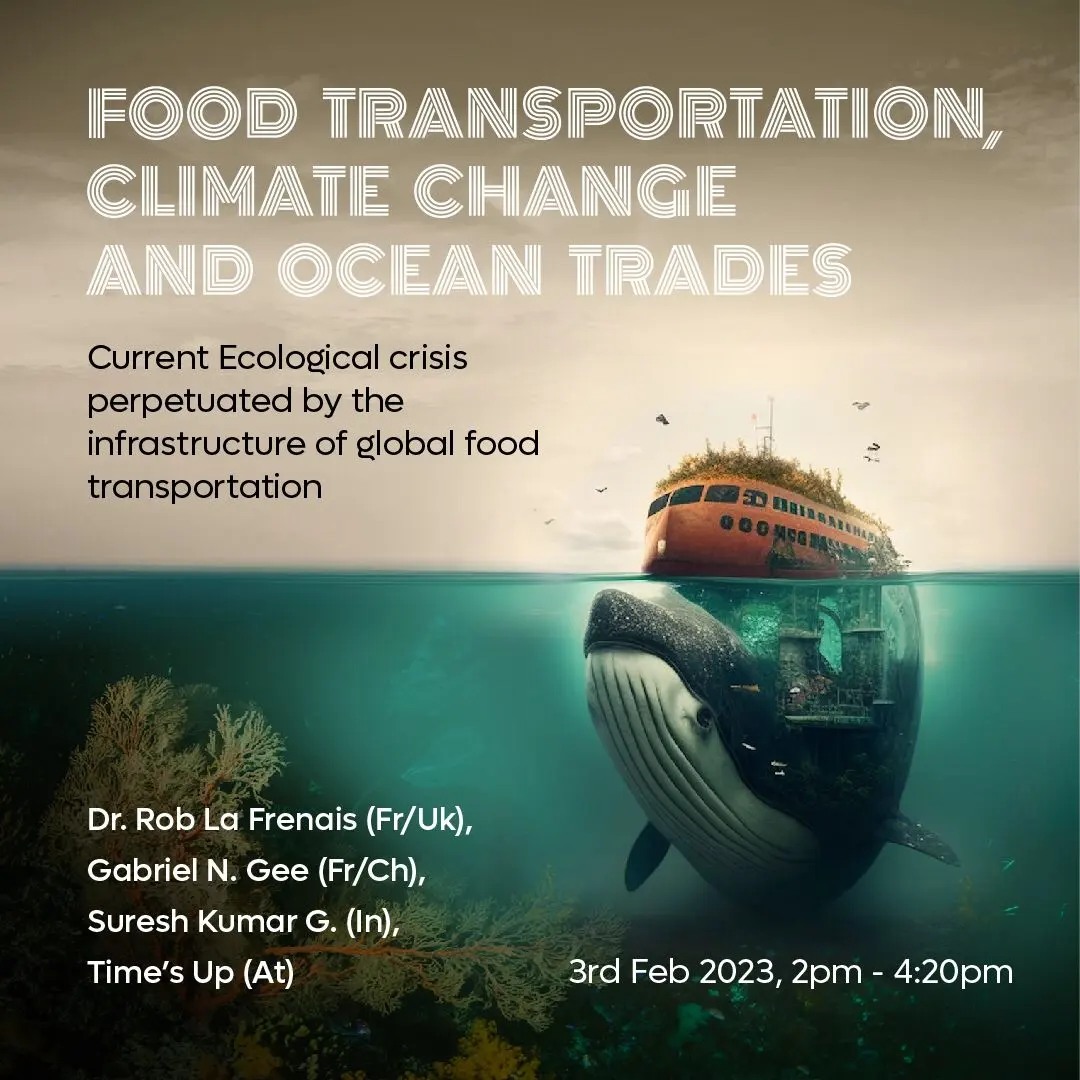
In many indigenous societies, including in India, farming / gardening concepts like 'three sisters', complimentary crop farming, multi crop farming are most successfully tried and tested methods of farming for over the centuries, which would be most self-sufficient approach for feeding a family's daily needs of nutritional food. Kinds of crops like monocots (millets) dicots (beans) oil seeds (all worked as attractive pollinator plants), sacrificial plants or insect replant plants (castor) were sown together to optimize the health of the crops, which could yield better crops. It was a method that offered the communities food and wealth while they were still connected to their traditions. It also ensured an effective and sustainable method for preserving the land's biodiversity, protecting the environment, supporting soil health, and advancing natural resources. The workshop is an invitation to work with this idea of finding the ‘three sisters’ from the local landscape, from gathering wild seeds to wild growth, planting, drawing, and storytelling. The workshop will be an opportunity to connect with the community and its surroundings. It will integrate food systems with arts & culture, offering entry points to rediscover their local history, transforming spaces, and understanding their own personal and community narratives.Speakers: Aastha Chauhan (In), Kush Sethi (In), Suresh Kumar G. (In)14:00 Presentations and Panel Discussion: Food transportation, climate change and ocean trades14:00 - 16:20Panel Discussion moderated by Ewen ChardronnetSpeakers: Dr. Rob La Frenais (Fr/Uk), Gabriel N. Gee (Fr/Ch), Suresh Kumar G. (In), Time’s Up (At)
16:20 Interaction/ Performance - Lab/Kitchen by Cascoland16:20 - 17:20Cascoland (Nl) projects are initiated by Fiona de Bell and Roel Schoenmakers and executed with multi-disciplinary teams of creatives. They are aimed at the development of an ecological and social sustainable society, locally and globally. Since 2004 Cascoland has worked on projects in The Netherlands, South Africa, Brazil, Peru, Mexico, Russia, Kyrgyzstan, Palestine, Egypt, Japan and in several countries in Europe and recently at Srishti Manipal Institute of Art, Design and Technology.
http://cascoland.com/ Speakers: Cascoland (Nl)17:20 Presentations and Panel Discussion: Living Projects & communities17:20 - 20:00Panel Discussion moderated by Ravi AgarwalSpeakers: A Growing Culture (Us), Aastha Chauhan (In), Hackteria (Intl), Margaux Schwab - Food Culture Days (Ch), Ravi Agarwal (In)
Speakers for this event
-
A Growing Culture (Us)
A Growing Culture (Us)
Organization
A growing culture is a radical storytelling organisation committed to confronting unjust power in the food system, in the fight for global food sovereignty. Loren works to shift public perceptions of those who produce the world’s food. He believes in farmers having a prominent seat at the table — a seat threatened by industrial agriculture. He is the founder an Executive Director of AGC, and has earned recognition for his contributions to ecological agriculture. Rohan is a human rights activist in India, working as a writer and researcher at A Growing Culture. He’s passionate about working with radical peasant and worker struggles towards revolutionary praxis. His interests are in contributing to research-led storytelling to challenge dominant narratives and strengthen the case for food sovereignty everywhere.
The dominant narrative around agriculture is centred around the need for food security. It tells us that in order to solve world hunger and to be food secure, we must apply scientific methods and improve crop yield to produce more food than ever before. But what if we told you that we already have more than enough food to go around? What if we told you that food security alone can never defeat hunger? What if we told you that hunger is merely a symptom of a much greater injustice, and the only way to weed it out is to confront legacies of power?
Organization
-
Aastha Chauhan (In)
Aastha Chauhan (In)
Artist
Aastha Chauhan (In) is an artist and curator known for her public art and community engagement projects in New Delhi, particularly in the urban village of Khirkee. She’s currently teaching Curating Public/Community Art projects at Srishti Manipal Institute of Art, Design and Technology. She’s board member of the Henvalvani Community Radio station, a project started as a youth initiative in 2001, in the Himalayan district of Chamba, Uttarakhand. An area which is home to historical, feminist, environmental movements such as the Chipko movement (Tree huggers) and Beej Bachao Andolan (save the (organic seed).
https://srishtimanipalinstitute.in/people/aastha-chauhan
https://henvalvani.wordpress.com/
https://www.downtoearth.org.in/coverage/chipko-an-unfinished-mission-30883
Artist
-
Cascoland (Nl)
Cascoland (Nl)
Artistic projects
Cascoland (Nl) projects are initiated by Fiona de Bell and Roel Schoenmakers and executed with multi-disciplinary teams of creatives. They are aimed at the development of an ecological and social sustainable society, locally and globally. Since 2004 Cascoland has worked on projects in The Netherlands, South Africa, Brazil, Peru, Mexico, Russia, Kyrgyzstan, Palestine, Egypt, Japan and in several countries in Europe and recently at Srishti Manipal Institute of Art, Design and Technology.
Artistic projects
-
Dr. Rob La Frenais (Fr/Uk)
Dr. Rob La Frenais (Fr/Uk)
Curator
Dr. Rob La Frenais (Fr/UK) has been a contemporary art curator for 35 years, working internationally and creatively with artists entirely on original commissions. He has recently curated exhibitions in the US, Scotland, France, Liverpool and Doncaster, UK, Mexico,Taiwan and India. From 1997-2014, Rob was the curator of The Arts Catalyst (UK). He co-founded the Future of Transportation project at Srishti Institute, Bangalore in 2014, involving co-curating projects at KMB in the last two editions. He is a regular writer for Art Monthly, UK, and Makery.info (Fr) and recently co-edited the book Space Without Rockets.
Future of Transportation is an informal movement that looks at playful and slightly subversive bottom-up ways to solve the world’s transport problems. Founded at Srishti in 2014 by Rob La Frenais, Meena Vari and the late Sudipto Dasgupta, it involved radical strategies like holding classes on a suburban train on the outskirts of Bangalore and closing streets to traffic around the college in The Streets Belong to People. Working with international artists such as Tania Candiani from Mexico, Future of Transportation presented a collateral pavilion at a previous Kochi Biennale. It is also an active Facebook group with 3200 members.
Curator
-
Gabriel N. Gee (Fr/Ch)
Gabriel N. Gee (Fr/Ch)
Researcher
Gabriel N. Gee is Associate Professor in Art History at Franklin University, Switzerland. His current research interests rooted in contemporary aesthetics looks at the changing imaginaries of our interconnected global cultures, in particular through industrial heritage, port cities, and natural environments, with particular case studies in Europe and Southeast Asia, paying attention to the potential of artistic research to open new spaces for cultural dialogue and innovation. Recent publications include a co-edited volume on Mobile Soils (TETI Press, 2021), and on “Maritime Poetics: from coast to hinterland” (Transcript Verlag 2021). Gabriel co-founded TETI Group in 2011, and guides the group’s activities to this day.
Notes on the Migration of recipes and their containers
On a marina in the port of Valencia, Spain, a little café offers drinks and tapas to boat owners and passers-by, sardines a la Plancha, grilled piments, but also cod croquettes fried in oil. Cod recipes can be traced back to the cuisine of numerous Southern European port cities, no least that of Genoa, Venice, and Lisbon. Yet the catch itself has long needed increasingly distant transportation to fill the desire of local clientèles. The café itself is charmingly improvised in a repurposed shipping container, a symbol of maritime globalisation associated with growing ecological pressure, which the nearby terminal towering above the scene anchors in tangible reality. This brief reflection aims to consider the imbrication of migration in culinary traditions in parallel to the vehicles of food transportation, from the amphora to the shipping container, considered in their ambiguous potentials as global agents.Researcher
-
Hackteria (Intl)
Hackteria (Intl)
Web platform
Hackteria is a web platform and collection of Open Source Biological Art Projects instigated in February 2009 by Andy Gracie (Uk), Marc Dusseiller (Ch) and Yashas Shetty (In), after collaboration during the Interactivos?09 Garage Science at Medialab Prado in Madrid. The aim of the project is to develop a rich wiki-based web resource for people interested in or developing projects that involve bioart, open source software/hardware, DIY biology, art/science collaborations and electronic experimentation.
Web platform
-
Kush Sethi (In)
Kush Sethi (In)
Ecological gardener
Kush Sethi (In) is an ecological gardener and forager based out of Delhi. Inspired by resilient forest ecosystems, his practice seeks to understand problems in manicured urban horticulture formats and find wilder, self-sustainable approaches. Lately, he has consulted Arts and Culture institutes on designing Sustainability Projects for local communities such as with Deutsches Museum Munich (Germany, 2020), Site Gallery Sheffield (UK, 2021), KultureForum WItten (Germany, 2022) and Ubersee-Museum(Germany, ongoing).
Ecological gardener
-
Margaux Schwab - Food Culture Days (Ch)
Margaux Schwab - Food Culture Days (Ch)
Curator
Margaux Schwab (Ch/Mx, 1989) lives and works between Berlin, Germany, and Vevey, Switzerland. She is a cultural producer and curator working at the intersection of art, ecology and hospitality, prioritizing spaces outside the gallery context. In 2016, she founded foodculture days, a knowledge-sharing platform around food ecologies and politics. foodculture days serves as a catalyst for discussions and actions through environmental and social claims, employing a biennale format that hosts a multitude of creative and culinary interventions in Vevey.
foodculture days is a platform based in Vevey (Switzerland) interested in the intrinsic link between food and ecology trough artistic and creative practices. At a time when environmental and social issues affect an ever-increasing number of living organisms, our collective consciousness attempts to comprehend these matters. Following this ethos, foodculture days proposes moments of encounter where the vitality of our entanglements and the plurality of experiences can co-exist and be made visible. Through democratic and mostly free of cost formats, such as exhibitions, performances, interventions in public space, radio shows, street newspaper publishing, screenings and collective meals outside of the institutional context, foodculture days days wishes to be a space for exchange of knowledge and know-hows that apprehends global topics rooted in a local context.
Curator
-
Ravi Agarwal (In)
Ravi Agarwal (In)
Artist
Ravi Agarwal has an interdisciplinary practice as an artist, environmental campaigner, writer, and curator. He has shown widely, including at the Biennials of Habana (2019), Yinchuan (2018), Kochi (2016), Documenta XI (2002), Sharjah Biennial (2013) etc., and curated several large shows (New Natures, A terrible beauty is born – Goethe Institute and CSMVS Museum, Mumbai, Imagined Documents – Les Recontres d’ Arles 2022). He has authored and edited books and journals (The Crisis of Climate Change, Routledge, 2021; Embrace Our Rivers – Kerber, 2017, Marg- Art and Ecology issue – April 2020). Ravi is also the founder and Director of the environmental NGO Toxics Link and recipient of the UN Award for Chemical Safety and Ashoka Fellowship.
www.raviagarwal.com
www.toxicslink.org
www.sharedecologies.orgEcologies in Transition
The talk will present some of my long-term engagements as an artist and environmentalist, with human and more-than-human communities which live in and with fragile landscapes and are becoming increasingly marginalized. These include traditional fishers living off the Bay of Bengal on the Tamilnadu coast, marigold farmers on the urban river floodplains in Delhi, and the nearly extinct South Asian vulture. These explorations attempt to delve into complex relationships of nature-cultures, and their new confrontations with inter-meshed global-local imaginaries and materialities.Artist
-
Suresh Kumar G. (In)
Suresh Kumar G. (In)
Artist
Suresh Kumar G. (In) is a Bangalore-based visual artist, who in recent years has worked with performance and community-based arts practices.
Suresh’s work throughout his artistic career deconstructs the narrative topics of both, India’s first modernity and the second, revealing the fissures and discontinuities between the promises and reality: city and village, agriculture and industry, old and the new working in harmony to build a new India. Sarjapura Curries is home grown project of Suresh Kumar G. It has been his dream project since he was a little boy, who visited his maternal grandparents’ Village in sub-urban Bangalore known as Sarjapura.Artist
-
Time’s Up (At)
Time’s Up (At)
Artist-Collective
Time’s Up is an Austrian organisation investigating the future everyday. Time’s Up creates explorable spaces in the context of possible futures, building physical stories that explore contemporary sociopolitical issues. Intrinsically transdisciplinary, their practice incorporates reflections within sociology, appropriate technology, economics, social justice, oceans, agriculture, the sciences and the arts. Recent work has included the experiential future physical narrative Turnton, prefigurative sail freight experiments, the future history of a SleepCoin and speculative AI-human scientific ocean exploration.
Further information about our past and current activities, research processes and results can be found at:In our talk we will look at some of the emerging networks of smaller traders operating at the fossil fuel free end of the shipping spectrum. Confronting the race to the bottom process of cheap everything, these activists, leveraging systems such as community supported supplies, permaculture and new economic models, are building trading and transport networks that seek to avoid the issues of climate crisis. Prefiguring the new economies as a form of hands on activism, these networks are opening ways to a new ecology of transport and trade. We will also dive into our work with prefiguring and imagining forms of this change, how the developments of sustainable networks might impact everyday life.
Artist-Collective
04feb18:0020:30Day 418:00 - 20:30(GMT+05:30) View in my timePepper House
Time
(Saturday) 18:00 - 20:30(GMT+05:30) View in my time
Location
Pepper House
X68W+WG3, TM Muhammad Rd, Kunnumupuram, Fort Kochi, Kochi, Kerala 682001, India
Schedule
- february 4, 2023
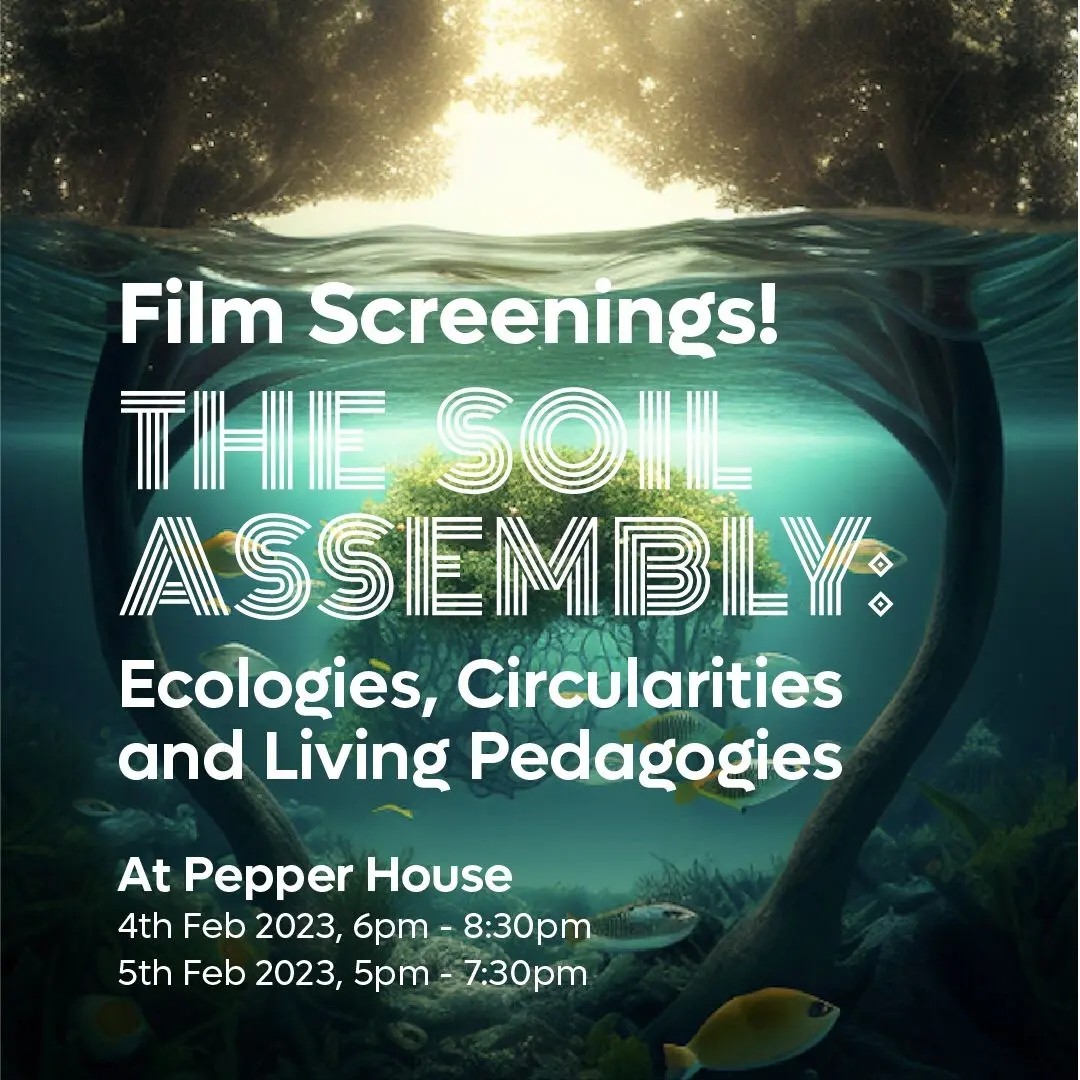
18:00 Films Curated by Dr. Vasanthi Maria Dass, followed by a discussion with Vivek Vilasini, Maya Minder, Ewen Chardronnet18:00 - 20:30ScreeningsSpeakers: Dr. Vasanthi Mariadass (In), Ewen Chardronnet, Maya Minder (Ch), Vivek Vilasini (In)
Event Details
Deep Weather, Ursula Biemann, Video Essay, Switzerland, (2013) 9’ The film juxtaposes and speculates how deforestation in Canada affects the flooding in the Brahmaputra River (India) where perennial flooding is
Event Details
Deep Weather, Ursula Biemann, Video Essay, Switzerland, (2013) 9’
The film juxtaposes and speculates how deforestation in Canada affects the flooding in the Brahmaputra River (India) where perennial flooding is forcing amphibious living among the people of the region.
https://geobodies.org/art-and-videos/deep-weather/
Acoustic Ocean, Ursula Biemann, Video Installation, Switzerland, (2018) 18’
The staging in this video is critical about spending enormously on space research and is concerned with the negligible attention to Ocean research. A woman from the Sami tribe plays a scientist and also a member of the tribe she is concerned about the reindeer perishing due to climate change; the icy surface makes it difficult for them to dig the lichens and other edibles beneath the icy surface.
https://www.youtube.com/watch?v=pfM2YkNTcDc
Subatlantic, Ursula Biemann, Sci/fi Documentary, Switzerland, (2015)11’
Biemann describes the sound transmission at the bottom of the ocean as yet again a region more than ever neglected by any kind of research. An interesting point in the film is about the sonic recording by submarines from the second world war that is used to detect enemy activities. However, they had failed to decipher the sounds made by marine creatures.
https://vimeo.com/462688127
Murmurs of the Jungle, Sohil Vaidya, Short, India, 2022, 20’,
Vaidya in his more recent work introduces stories whispered by the trees in the woods and by the people of a small village in the western ghats. These narratives become a bridge between the past and present. Moreover, they are eventually defining the symbiotic relationship of humans with nature.
https://www.youtube.com/watch?v=3MSiers49J8
Umi No Oya, Ewen Chardronnet & Maya Minder, HD video, France/Switerland, 2022, 14’30
In southern Japan, at the base of the Uto peninsula, inside Sumiyoshi park, near the shrine, there is a monument. The face of the monument is the profile of a bespectacled middle-aged woman wearing a button-down shirt, her gaze tilted slightly upward and into the distance, as if watching over the sea. Below the portrait is inscribed IN MEMORY OF MADAME KATHLEEN MARY DREW, D. Sc. – a British phycologist who died in 1957 at the age of 56, having never set foot in Japan.
https://roscosmoe.org/homo-photosyntheticus/
Food Forest: encounter with Vivek Vilasini, Ewen Chardronnet & Maya Minder, 2023 19’59
In January 2023, during the Srishti Manipal Institute interim Festival of Ideas, a group of students of the group “Contained Multitude: a Handtaste of Complex Systems” visited artist Vivek Vilasini’s Food Forest in Alachan, Munnar, Kerala. They performed a collective dinner orchestrated by Maya Minder with Alaka Kavallur.
Speakers for this event
-
Dr. Vasanthi Maria Dass (In)
Dr. Vasanthi Maria Dass (In)
Researcher
Dr. Vasanthi Dass (In) did her MA and Ph.D. in Film Studies and Critical Theory from Indiana University of Pennsylvania, US. She is a faculty, researcher, and dean for New Humanities and Design at Srishti Manipal Institute for Art Design and Technology, Bengaluru.
https://srishtimanipalinstitute.in/people/vasanthi-mariadass
Researcher
-
Ewen Chardronnet (Fr)
Ewen Chardronnet (Fr)
Curator
Ewen Chardronnet (Fr) is a collective artist, author, journalist and curator. He is currently editor-in-chief of the bilingual web magazine Makery.info and coordinator of the Creative Europe cooperation programs “More-Than-Planet” (2022-2025) and “Rewilding Cultures” (2022-2026). In his work, he is interested in practices, tactics and speculations that connect artistic research and scientific knowledge to the creation of social situations that intertwine discourses and shifts of perspectives in the very fabric of society.
https://www.makery.info/en
https://laboratoryplanet.org/
https://roscosmoe.orgCurator
-
Maya Minder (Ch)
Maya Minder (Ch)
Following the Biohacker, Maker and Thirdspace movements, Zurich based Maya Minder uses grassroots ideas, safe zones and citizen science to enable collective story telling through food and cooking. After studying Art history at the University of Zurich and Fine Arts at Zurich University of Arts, she has been co-curating and organizing projects independently or within the International Hackteria Society. Within her Green Open Food Evolution project she creates entanglements between human commodities and animism of nature. “Cooking transforms us” is a framework Minder weaves like a strings through her work. Cooking serves her to reveal the metaphor of the human transformation of raw nature into cooked culture, fostering evolutionary ideas of a symbiotic co-existence between plants, animals and humans.
-
Vivek Vilasini (In)
Vivek Vilasini (In)
Artist
Vivek Vilasini (In) is a multimedia artist, trained as a Radio Officer at the All India Marine College, Kerala, India and then in sculptural practices from traditional craftspeople. His artistic intervention of ‘Munnar food forest’ to address society’s everyday concerns about food and water started off in 2008. Vivek’s works has been shown at numerous international exhibitions and festivals. Vivek’s Munnar food forest is one of the first inspirations of this soil assembly.
Artist
05feb17:0019:30Day 517:00 - 19:30(GMT+05:30) View in my timePepper House
Time
(Sunday) 17:00 - 19:30(GMT+05:30) View in my time
Location
Pepper House
X68W+WG3, TM Muhammad Rd, Kunnumupuram, Fort Kochi, Kochi, Kerala 682001, India
Schedule
- february 5, 2023
17:00 Futures of the Soil Assembly - Closing discussion and announcement (on site)17:00 - 18:00Final panel with Meena Vari, Neal White, Maya Minder, Ewen Chardronnet
Sum up and announcement for the future Soil Assembly Speakers: Ewen Chardronnet (Fr), Maya Minder (Ch), Meena Vari (In), Neal White (Uk)18:00 Screening: The Mushroom Speaks, Marion Neumann (Ch), 202118:00 - 19:30Film Curated by Dr. Vasanthi Maria Dass
The Mushroom Speaks, Marion Neumann, Intermezzo Films, Switzerland, 2021, 90’
Under each mushroom, there hides a network that is invisible to the naked eye and that is evolving beneath our feet. The Mushroom Speaks ventures into this underground world, to hear what these organisms have to tell us. An initiatory journey to discover the fungal realm, the planet’s real immune system. A fascinating ecosystem recounted with sensitivity by Marion Neumann.
trailer:
https://www.youtube.com/watch?v=hp1u4T0QlmE
Speakers for this event
-
Ewen Chardronnet (Fr)
Ewen Chardronnet (Fr)
Curator
Ewen Chardronnet (Fr) is a collective artist, author, journalist and curator. He is currently editor-in-chief of the bilingual web magazine Makery.info and coordinator of the Creative Europe cooperation programs “More-Than-Planet” (2022-2025) and “Rewilding Cultures” (2022-2026). In his work, he is interested in practices, tactics and speculations that connect artistic research and scientific knowledge to the creation of social situations that intertwine discourses and shifts of perspectives in the very fabric of society.
https://www.makery.info/en
https://laboratoryplanet.org/
https://roscosmoe.orgCurator
-
Maya Minder (Ch)
Maya Minder (Ch)
Following the Biohacker, Maker and Thirdspace movements, Zurich based Maya Minder uses grassroots ideas, safe zones and citizen science to enable collective story telling through food and cooking. After studying Art history at the University of Zurich and Fine Arts at Zurich University of Arts, she has been co-curating and organizing projects independently or within the International Hackteria Society. Within her Green Open Food Evolution project she creates entanglements between human commodities and animism of nature. “Cooking transforms us” is a framework Minder weaves like a strings through her work. Cooking serves her to reveal the metaphor of the human transformation of raw nature into cooked culture, fostering evolutionary ideas of a symbiotic co-existence between plants, animals and humans.
-
Meena Vari (In)
Meena Vari (In)
Artistic Coordinator
Meena Vari (In) is the Dean at the School of Media Arts and Sciences and Dean of Contemporary Art and Curatorial Practice at Srishti Manipal Institute of Art, Design and Technology (www.srishtimanipalinstitute.in). She coordinates activities of the Center for Experimental Media &Arts (CEMA) and works closely with artists to develop the practice of Contemporary arts in Srishti and outside. Since 2004, she has been curating an annual international project called ‘Srishti Interim – Festival of Ideas & Performance’ by inviting Contemporary artists from around the world. Soil Assembly is one of the projects initiated during the Srishti Interim 2023.
Artistic Coordinator
-
Neal White (Uk)
Neal White (Uk)
Neal is from London, founder of Office of Experiments, and Professor of Art based at CREAM, University of Westminster where he is part of the Ecological Futurisms Collective.
Videos
Day 1
Day 2
Day 3
Organizers
Kochi-Muziris Biennale in partnership with Srishti Manipal Institute of Art, Design and Technology


Curators
Ewen Chardronnet, Maya Minder, Neal White and Meena Vari
Production / Coordination Team
Amitabh Kumar | Meghana Singh | Benjamin Peter | Malavika Suresh | John Ganta
Collaborators
Makery.info | Centre for Research and Education in Arts and Media (CREAM) – University of Westminster | Hackteria.org | Future of Transportation | Laboratoryplanet.org | Center for Experimental Media and Arts – Srishti Manipal
Supported by
ProHelvetia Delhi | Institut Français | Embassy of Italy | ART2M | Rewilding Cultures, Creative Europe program of the EU | Ecological Futurisms, CREAM – University of Westminster

